Introduction
Disengaged employees aren't just unhappy — they're expensive. According to Gallup's 2026 State of the Global Workplace report, global employee engagement fell to just 20% in 2025, costing the world economy an estimated $10 trillion — roughly 9% of global GDP. That number reflects something most managers already sense: when people don't feel connected to their team, performance suffers.
A well-planned outing outside the office is one of the most underused tools for rebuilding that connection. Time spent together in a different environment builds the kind of trust and communication that no meeting agenda can manufacture — but only when the activity is matched to a clear purpose. Most outings fall flat because someone chose the event before defining the goal.
This guide solves that. Below you'll find 56 corporate team outing ideas for 2026, organized into four practical categories:
- Indoor activities for any weather or budget
- Outdoor experiences that get teams moving
- Creative & cultural outings that spark conversation
- Virtual/hybrid options for distributed teams
A planning guide at the end helps you match the right activity to your team's actual goals.
Key Takeaways
- Low engagement costs companies real money; shared experiences are one of the fastest ways to rebuild team connection
- 56 ideas across four categories: indoor, outdoor, creative & cultural, and virtual/hybrid
- Match the activity to the goal: new hires need rapport-building, burned-out teams need decompression, cross-functional groups need collaboration challenges
- A well-planned $500 outing beats a poorly-designed $5,000 one every time
- For larger off-site outings or retreats, Xalmax Travel's free venue sourcing service matches your team to the right venue
Indoor Corporate Team Outing Ideas
Indoor outings offer year-round flexibility and structured environments that work for groups of nearly any size. The 15 ideas below span problem-solving, culinary, active, and entertainment formats — because not every team wants the same thing.
Mind-Bending Challenges & Games
Escape rooms put teams in a room with one mission: solve a series of interconnected puzzles before the clock runs out. Peer-reviewed research published in the Journal of the Medical Library Association identifies communication, delegation, lateral thinking, and attention to detail as core skills the format builds. With more than 2,000 venues now operating across the US, availability is rarely an issue.
Murder mystery dinners layer a fictional whodunit over a shared meal. Participants take on character roles, collect clues, and piece together the story over the course of an evening. The format rewards observation and collaboration while giving quieter team members a natural vehicle for participation.
Trivia night levels the playing field in ways the office rarely does — the junior analyst might outscore the senior VP in pop culture rounds. Platforms like Kahoot or a hired host make setup easy for groups of 10 to 100+.
Board game tournaments using strategy games like Codenames or Ticket to Ride create friendly rivalry and lateral thinking in a low-cost, easy-to-organize format. Works equally well in-office or at a rented venue.
Active Indoor Fun
- Laser tag — fast, adrenaline-driven, and requiring split-second team strategy; ideal for competitive groups without high physical skill barriers
- Indoor rock climbing — teammates coach and cheer each other on; many gyms offer group packages with certified instructors, making it accessible for mixed fitness levels
- Bowling night — universally accessible, low-pressure, and perfect for generating cross-department conversation across seniority levels
- Indoor mini golf — a relaxed, laugh-friendly format widely available across US cities; works particularly well for new hire onboarding events
Culinary, Comedy & Entertainment
Cooking classes run by a chef create natural conditions for task delegation, time pressure, and shared reward: everyone sits down to a meal they made together. Most accommodate groups of 10 to 80+ and can adapt for dietary restrictions.
Cook-off competitions divide teams and assign a dish category. The competitive structure adds energy; the collaborative cooking keeps it inclusive.
Cocktail-making workshops blend bartending technique, casual conversation, and creativity. They work particularly well for post-work celebrations or client appreciation events.
Improv comedy workshops train the "yes, and" mindset that underlies good collaboration. Research on medical improvisation training found that 91–93% of participants reported a positive impact on teamwork after similar formats. Many cities have improv theaters with corporate-specific sessions ready to book.
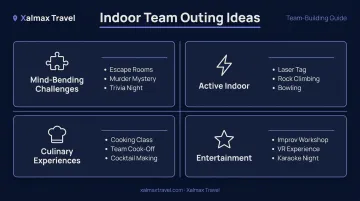
Karaoke night is personality-revealing and high-energy. Particularly effective for milestone celebrations or breaking ice with new hires.
VR experiences — multi-player VR puzzles and virtual challenges are a growing option for tech-forward teams. PwC found VR training produced learners 275% more confident applying new skills versus classroom methods, making it a strong pick for teams that want entertainment and genuine development in one session.
Office Olympics — a series of DIY mini-competitions (paper airplane tosses, chair races, desk trivia sprints) held in-office or a rented space. Minimal cost, maximum participation, and easy to theme around company culture or milestones.
Outdoor & Adventure Team Outing Ideas
There's solid evidence that outdoor settings accelerate trust-building. A 2024 case study published in the Journal of Outdoor Recreation and Tourism found that 8 of 9 employees at a global cybersecurity firm increased their workplace psychological capital following a five-day outdoor adventure program.
Qualitative findings included reduced hierarchy, vulnerability sharing, and what participants described as a "circle of trust."
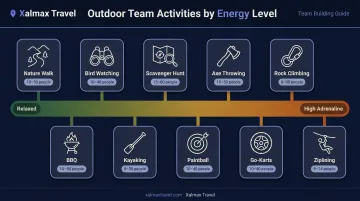
The 15 ideas below range from serene walks to full-adrenaline challenges.
Nature & Exploration
Guided hikes or nature walks strip away office hierarchy in a way conference rooms rarely do. Walking side-by-side generates more honest conversation than most facilitated sessions — just choose accessible trails when fitness levels vary.
Kayaking or canoeing makes collaboration physically literal. Two people who can't agree on direction will drift in circles. This immediate feedback loop is one of the format's best teaching moments.
Paddleboarding is beginner-friendly and laugh-inducing — falling in is practically built into the experience. Works well for warm-weather coastal or lakeside outings with groups of 10 to 40.
City or outdoor scavenger hunts are ideal for cross-functional teams. Small groups must strategize together without a manager directing traffic. GPS-based formats work well for both self-organized and professionally facilitated versions — GooseChase handles both formats well and is worth considering for larger groups.
High-Energy & Adventure Activities
- Outdoor paintball — teaches tactical communication and squad coordination; individual heroics genuinely don't work
- Axe throwing — social, accessible, and generates natural coaching moments between colleagues; standalone venues with group booking options are widely available across the US
- Go-kart racing — competitive, scalable to 10–50 participants, and produces light-hearted rivalry that generates conversation for weeks
- Ziplining: the shared experience of overcoming nerves, and watching colleagues do the same, creates bonding moments that outlast the activity itself
- Mountain biking: guided group rides build shared endurance; offer varied difficulty routes to accommodate all fitness levels
Outdoor Team Sports & Field Games
Beach volleyball or sand sports — zero barrier to entry. A casual day with organized volleyball, frisbee, or cornhole generates easy, informal bonding that more structured activities sometimes can't replicate.
Field day with relay races — sack races, three-legged races, tug of war. Nostalgia-driven, democratic, and impossible to take too seriously. No skill or fitness required to have a great time.
Ropes course or high ropes challenge — professionally-led programs build leadership and trust in a psychologically safe environment. Many providers offer corporate packages with a facilitated debrief, which significantly increases the lasting impact.
Outdoor obstacle course — team-based formats require physical collaboration: helping teammates over walls, through crawls, across obstacles. When your colleagues are literally pulling you over a wall, the team dynamic shifts in ways a workshop rarely achieves.
Relaxed Outdoor Social
Outdoor BBQ or company cookout paired with lawn games (cornhole, horseshoes, bocce) lets genuine conversation happen naturally. Particularly effective as a seasonal milestone celebration or project completion event.
Camping or glamping trip — multi-day experiences create the kind of connection that no single afternoon can replicate. Campfire conversations, shared meals, and time away from screens let people show up as full humans rather than job titles. Glamping options make this format accessible for teams with varying outdoor comfort levels.
Creative & Cultural Team Outing Ideas
Creative outings are especially effective for teams that need mental decompression, cross-functional bonding, or a change of perspective. The 14 ideas below include hands-on workshops, cultural experiences, food and drink outings, and community activities.
Hands-On Art & Craft Workshops
Because no one arrives as an expert, creative workshops equalize status in a way professional skills-based activities can't.
- Glassblowing workshop: Groups typically cap at 20–25, making it one of the more intimate and memorable options on this list
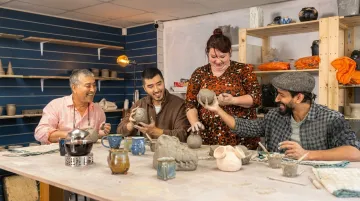
- Pottery or ceramics class: Meditative and conversation-friendly — the comedy of misshapen pots levels the playing field between executives and new hires
- Group mural painting: Each member contributes a section guided by a professional artist; the finished piece can hang in the office afterward
- Paint and sip night: Guided painting with drinks in hand, no artistic experience required — low-pressure and effective for teams that need to unwind
- Flower arrangement workshop: Calming, tactile, and zero competition; well-suited to teams coming off a demanding project sprint
Culture, Entertainment & Purpose
Museum or art gallery tour — a guided group visit sparks discussion about interpretation and perspective, skills that translate directly to strategic alignment. Look for venues offering private corporate tour options.
Dance class — partner or group formats (salsa, swing, beginner line dancing) require physical coordination and a willingness to be vulnerable — both of which tend to build real rapport faster than a structured icebreaker.
Cultural food tour — a guided city tour sampling diverse cuisines across multiple stops; the variety of flavors and settings generates shared conversation long after the last bite.
Photography challenge or photo walk — assign creative prompts to small groups, then present the results. Sharpens observation skills, generates unexpected laughs, and needs nothing more than a smartphone.
Comedy or theater show outing — attending live improv builds shared references and natural post-show conversation. Strong choice for teams that prefer experiencing over participating.
Wine or craft beer tasting — a sommelier- or brewer-led session is relaxed and conversation-rich; works especially well as a client appreciation event or milestone celebration.
Cocktail-making class — teams learn and compete on craft cocktail creation; combines creativity, social ease, and a tangible shared result.
Volunteering or day of service — building, restoring, or serving something for the community creates a sense of shared purpose that competition-based activities rarely match. Carries additional employer branding value for companies with clear social responsibility commitments.
Tree planting or environmental restoration — meaningful, low physical barrier, and particularly resonant for teams with sustainability commitments. Teams often reference these outings long after the event — there's something about leaving a visible mark on a place that sticks.
Virtual & Hybrid Team Outing Ideas for Remote Teams
Gallup reports that 51% of remote-capable US employees worked hybrid in 2025, averaging 2.3 on-site days per week. Remote and hybrid teams need intentional connection-building just as much as co-located ones — and virtual experiences have matured considerably. The 12 ideas below span competitive, creative, and social formats.
Competitive Virtual Activities
- Virtual trivia nights via Kahoot, Jackbox, or a hired host: breakout rooms for team rounds and a shared scoreboard keep competitive energy high across distributed groups.
- Online escape rooms: fully facilitated providers deliver real-time collaborative puzzle-solving via video — effective when all participants join simultaneously.
- Virtual murder mystery sessions: character assignments, shared digital clue packets, and a video call format work best with groups of 10–30 where a facilitator can manage individual character threads.
Creative and Skill-Based Virtual Activities
- Virtual cooking classes: an instructor leads via video with ingredients pre-shipped or drawn from a standardized pantry list. Cooking simultaneously from separate kitchens generates real engagement — far more than another passive call.
- Virtual paint and sip sessions: an art instructor guides everyone through the same painting from their own homes. Supply kits shipped in advance eliminate setup friction on the day.
- Virtual craft workshops (candle-making, terrarium-building, cocktail kits): the shared simultaneous format creates genuine connection that passive video calls simply can't replicate.
Social and Hybrid Formats
- Virtual happy hours with structured icebreakers: Two Truths and a Lie, virtual bingo, and "show me your home office" tours prevent the format from becoming a passive hang.
- Virtual scavenger hunts via GooseChase or similar platforms: small teams compete on photo and video missions from their own environments, with no physical coordination required.
- Virtual game shows using Jackbox party games or custom quiz formats: many Jackbox titles are built for audience participation, making them effective for larger groups.
Hybrid outings require deliberate design, not retrofitting. The 2026 shift is toward intentional hybrid formats where remote participants aren't passive observers of an in-person event. Proven approaches:
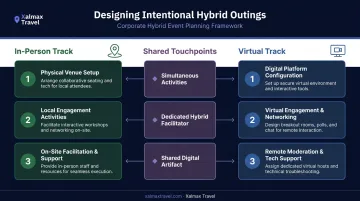
- Simultaneous virtual and physical activities running on parallel tracks
- Dedicated hybrid facilitators managing both audiences in real time
- Shared digital artifacts that both groups contribute to equally
How to Plan a Corporate Team Outing Your Team Will Love
Start With a Goal, Not an Activity
The most common planning mistake: choosing a venue or activity before defining the purpose. The format should follow the goal, not the other way around.
| Goal | Best Format |
|---|---|
| Onboarding / new hire cohort | Rapport-building: cooking class, bowling, scavenger hunt |
| Cross-functional alignment | Collaborative challenges: escape rooms, ropes course, field day |
| Morale recovery after a hard sprint | Decompression: paint and sip, food tour, cookout |
| Milestone celebration | High-energy or elevated: axe throwing, go-karts, wine tasting |
| Leadership development | Reflective and facilitated: ropes course, outdoor adventure, improv |
SHRM's research on team-building is direct on this point: efforts fail when they lack clear goals, skip employee input, and treat the outing as a standalone event with no follow-up.
Match the Outing to Your Team
Before booking anything, run a short pre-event poll. Ask about activity preferences, physical accessibility needs, and dietary requirements. This serves two purposes: it reveals practical constraints and signals to employees that their input matters.
A few rules of thumb:
- Group of 8–20: Almost any format works; lean toward activities with natural conversation embedded (cooking, trivia, creative workshops)
- Group of 20–80: Choose scalable formats with parallel tracks or team subdivisions — field day, scavenger hunt, cooking competition
- Group of 80+: Stick to formats designed for large participation — trivia tournaments, outdoor BBQs, bowling leagues, go-kart racing heats
- Mixed introvert/extrovert teams: Avoid formats that require public performance; prioritize side-by-side activities with built-in downtime
Logistics, Venue, and Follow-Up
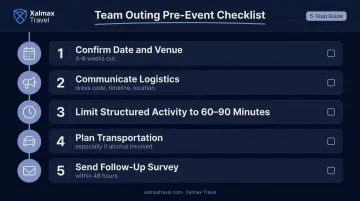
Pre-event checklist:
- Confirm the date and venue at least 4–6 weeks out (longer for large groups or peak seasons)
- Communicate logistics clearly — dress code, location, timeline, what to bring
- Keep structured activity windows to 60–90 minutes; energy drops sharply after that
- Plan for transportation, especially if alcohol is part of the event
- Send a brief follow-up survey within 48 hours to capture what worked
On venue sourcing for larger outings:
Finding the right off-site venue for a team outing, retreat, or multi-day event takes time most planners don't have. Xalmax Travel's venue sourcing service addresses this directly: submit your budget, group size, preferred city, and any special requirements — their team researches options, returns proposals with negotiated rates and full amenity details, and manages contracts through to final confirmation.
The service is free to planners. Hotels and venues pay Xalmax's commission directly, with no fees passed to the client. For teams in California or Colorado — or planning destination retreats — their global venue network gets you from initial search to signed contract without the back-and-forth.
Frequently Asked Questions
What is a fun team outing?
A fun team outing is any shared experience outside the normal work routine where employees connect, laugh, and collaborate without the usual office structure. Options range from escape rooms and cooking classes to outdoor adventures and volunteer days. The "fun" part comes from matching the activity to the team's actual personality, not the planner's assumption about it.
How do you make corporate events fun?
Three levers matter most: choose activities that match the team's personality rather than defaulting to generic formats, remove unnecessary formality and rigid scheduling, and build in unstructured time between activities. The conversations that happen in the margins often matter more than the activity itself.
How do you plan a corporate team outing?
Define the goal first, then get team input on activity preferences, set a realistic budget, book early, communicate logistics clearly in advance, and follow up with a brief survey afterward. Starting with the activity instead of the goal is where most outings go wrong.
How long should a corporate team outing be?
Most single-activity outings run 2–4 hours effectively. Full-day formats work for multi-activity events with natural breaks built in. Overnight and multi-day retreats are best reserved for leadership teams, major onboarding cohorts, or significant milestone occasions.
What team outing activities work best for large groups?
Formats that scale well for 30–100+ participants include scavenger hunts, field day competitions, cooking competitions, bowling leagues, go-kart racing heats, trivia tournaments, and outdoor cookouts. The common thread: parallel-track structures where subgroups compete or collaborate simultaneously.
How often should companies do team outings?
Treat outings as part of an ongoing engagement system rather than isolated calendar fillers. Three to four intentional outings per year, tied to meaningful moments like quarter closes, new hire onboarding, or project completions, consistently outperforms arbitrary monthly events.