Introduction
Standard business travel looks like this: a middle seat to Chicago, a Hampton Inn, a conference room with bad lighting, and a boxed lunch. Corporate incentive travel looks like this: a private dinner inside the Eiffel Tower, skydiving over Dubai's Palm Jumeirah, or a samurai sword lesson choreographed by the director of Kill Bill.
These aren't hypotheticals. They're real examples from Condé Nast Traveler's 2025 deep dive into the incentive travel industry — and they reflect just how dramatically the stakes have risen.
Corporate incentive travel has undergone a transformation since COVID. What was once a trip to Vegas with a group dinner has become a globally competitive sport, with companies spending $25,000 or more per person to reward their top performers.
This piece breaks down what these programs are, why they've escalated so sharply, what they actually look like today, and why the business case remains strong even when the price tag keeps rising.
Key Takeaways
- Corporate incentive trips are performance-based travel rewards, most common in sales-driven industries, designed to motivate and retain top talent
- Post-pandemic spending skyrocketed — North American companies now average $6,000 per person, with elite bespoke programs reaching $75,000 per couple
- US employee engagement hit a 10-year low of 31% in 2024, putting experiential recognition back at the top of the priority list
- Modern trips prioritize hyper-local, immersive experiences over generic group activities — insider access and curated local moments over cookie-cutter itineraries
- Venue selection sets the tone — Xalmax Travel offers free expert sourcing so planners focus on strategy, not vendor research
What Is a Corporate Incentive Trip?
A corporate incentive trip is a company-funded, all-expenses-paid travel reward given to employees — typically top sales performers — who hit or exceed specific business goals. The reward is earned, not assigned. That distinction is what gives the program its motivational power: people work harder for something they have to win than something they're simply handed.
Unlike a corporate retreat (where attendance is mandatory) or a sales conference (where attendance is professional obligation), an incentive trip is aspirational. It's meant to feel like a genuine luxury vacation, usually blending a brief recognition moment — an awards gala, a brief ceremony — with several days of leisure, exploration, and celebration.
The National Cash Register Company ran what's considered the first modern version in 1906, rewarding 70 top salespeople with an all-expenses-paid trip. SITE (Society for Incentive Travel Excellence) formed in 1973 to professionalize the industry and today represents 2,000+ members across 29 countries.
Who uses these programs most?
- Sales teams are the primary recipients, targeted by 53% of programs
- General employees (43%), channel partners (33%), and customers (27%) also qualify in many structures
- Heaviest adoption is in pharma, healthcare, technology, finance, insurance, and automotive
- 46% of US businesses run incentive travel programs, spending roughly $22.5 billion annually
The Incentive Research Foundation (IRF) puts it directly: incentive travel is designed to "turbo-charge incremental sales and sales-related activities." The goal isn't to reward routine performance — it's to push people toward results they wouldn't otherwise reach.
The Post-COVID Arms Race: How Incentive Travel Got Extravagant
From Vegas to Everywhere
Before COVID, the incentive travel baseline was relatively modest — domestic destinations like New York, Miami, or Las Vegas, standard hotel stays, group dinners. Then the pandemic shut everything down for two years.
When travel reopened, pent-up demand hit hard. Sean Hoff, founder of Moniker Partners, put it simply in the Condé Nast Traveler piece: "After COVID, things went crazy." Companies that had frozen programs came back with dramatically elevated ambitions — and found themselves competing for talent in a hot post-pandemic job market.
The dynamic became self-reinforcing: if your competitor is flying top performers to Paris, a Las Vegas trip stops looking like a reward and starts looking like an afterthought.
The Numbers Behind the Escalation
| Tier | Per-Person Spend | Context |
|---|---|---|
| North America average | $6,000 | 2025 Incentive Travel Index |
| Global average | $5,100 (+4% YoY) | 2025 ITI via MPI |
| High-end bespoke programs | Up to $75,000/couple | Condé Nast Traveler, 2025 |
| 2014 benchmark | Only 26% of companies spent over $4,000 | IRF historical data |
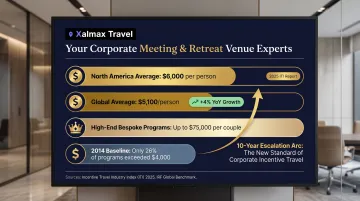
That jump from 26% to near-universal five-figure spends happened in roughly a decade — most of it in the last three years.
Remote Work and the Experience Premium
Competitive pressure explains part of the escalation, but there's a structural driver underneath it: remote work dismantled the informal relationship-building that used to happen naturally in offices. Shared hallways, impromptu lunches, and team rituals simply don't exist for distributed teams. KPMG's global AI trust research found that roughly one in five respondents say AI use has already reduced communication and collaboration at work — compounding the isolation that remote work created.
When people don't share physical space anymore, a five-day trip to Japan isn't just a reward. It's one of the only remaining opportunities for high performers to genuinely connect with each other and with the company's culture.
The Optics Problem — and How Companies Responded
Some companies pulled back after public backlash. Salesforce's decision to fly Katy Perry to a President's Club event shortly before announcing layoffs became the defining cautionary example.
The industry's response, somewhat counterintuitively, has been to make programs more exclusive rather than less extravagant. Fewer qualifiers, same jaw-dropping experiences — a smaller, less visible celebration that still delivers full motivational impact for the earners who made it.
What a Modern Incentive Trip Actually Looks Like
Destinations and Scale
The 2025 Incentive Travel Index found that 70% of buyers are actively seeking destinations they haven't used before — novelty and genuine bucket-list appeal are now table stakes, not differentiators.
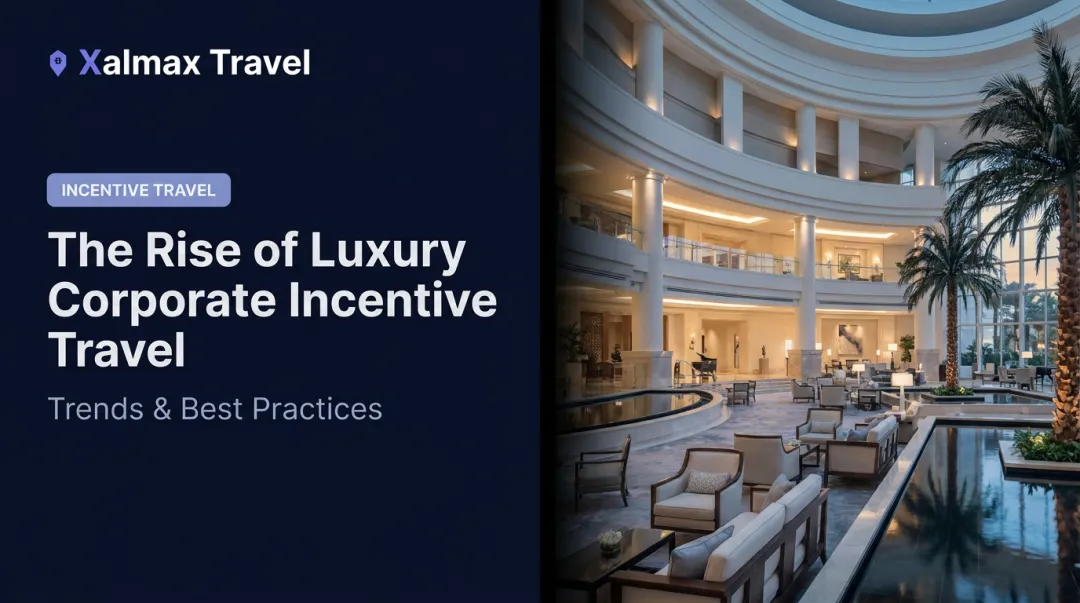
Current top destinations include Japan, Dubai, the Adriatic coast, Paris, Kauai, and Marbella — places that feel genuinely difficult to replicate independently. For larger programs, full hotel buyouts of an entire Four Seasons or Ritz-Carlton property are increasingly common, creating an exclusive environment where qualifiers feel the trip was designed entirely for them.
Experiences: From Generic to Insider-Only
The industry has moved away from zip lines, catamaran sails, and golf outings. The question planners now ask is: what experience is only possible here, through access most travelers can never get?
Examples from current programs:
- Private after-hours tours of historic museums or palaces
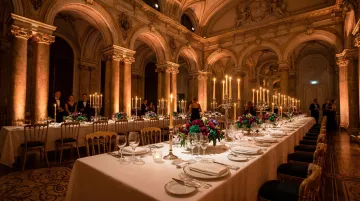
- Exclusive gala dinners in venues normally closed to the public
- Cultural craft workshops with master artisans
- Formula 1 access from private hospitality lounges
- Curated culinary experiences at Michelin-starred restaurants not bookable by the general public
Gifting That Becomes the Memory
Gifting has evolved dramatically — from branded merchandise to monogrammed items to choice-based curated suites to, now, locally sourced artisan pieces that blur the line between gift and experience. Hand-painted olive oil jugs crafted by local artists, for example, or a samurai sword lesson choreographed by a film industry professional.
What these gifts share is that they can't be bought on Amazon or replicated at home — which is precisely the point.
That ethos carries through the overall program architecture as well. A typical incentive trip runs:
- Duration: 3–8 days
- Structure: Roughly 60% organized programming, 40% personal free time — a ratio that has shifted noticeably toward more unstructured time in recent years
- Anchor event: A gala awards dinner where top achievers receive public recognition in front of their peers
The Business Case: Why Companies Keep Investing
ROI and Productivity
The most-cited data point in the industry comes from the IRF's research on sales incentive programs, which found an 18% increase in sales productivity and a 112% ROI on program investment. The caveat: this study analyzed data from 2002–2003 and was published in 2010. No single updated figure has replaced it — but practitioners and program managers running these programs today consistently report the same pattern.
The more immediate financial argument involves retention math:
- Replacing an employee costs 50%–200% of their annual salary (SHRM)
- A six-figure sales performer costs $50,000–$200,000+ to replace
- A top-end incentive trip at $6,000 per person is a fraction of that cost
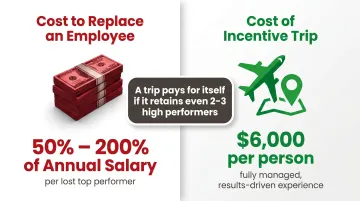
If a well-designed program keeps even two or three high performers from leaving, it pays for itself many times over.
Why Travel Beats Cash
The obvious objection: why not just give people the equivalent cash bonus? Cash feels simpler, cleaner, more flexible. The problem is what happens to it.
IRF behavioral economics research finds that 70% of human decision-making is emotional, and more than two-thirds of respondents prefer travel for large rewards. Cash gets absorbed into routine spending — a mortgage payment, a credit card bill — within days. A trip to Japan creates an identity association that lasts years: I'm someone who earns this kind of experience.
Travel also creates social proof. When a qualifier comes back and talks about their trip, it motivates the people who didn't qualify to work harder next cycle. Cash bonuses don't generate that kind of word-of-mouth.
The Engagement Context
This matters more now than it ever has. US employee engagement fell to 31% in 2024 — a 10-year low — with workers under 35 showing the steepest declines in recognition. Globally, only 20% of employees were engaged in 2025, costing an estimated $10 trillion in lost productivity.
Against that backdrop, a program that makes your top performers feel genuinely seen and celebrated isn't a luxury. Companies that run well-structured incentive programs don't just retain more talent — they widen the performance gap between themselves and competitors who are handing out gift cards.
How to Plan a High-Impact Incentive Trip
Start With Your Audience
The most common planning mistake: defaulting to the CEO's golf preference or the event planner's personal bucket list. The trip must feel aspirational to the earners, not the organizers.
Before choosing a destination, map your potential qualifiers:
- Demographics: Age range, income level, role, family situation
- Psychographics: What do they find genuinely exciting? What travel experiences do they aspire to?
- Travel appetite: International vs. domestic, adventure vs. luxury relaxation, group vs. independent activities
A cohort of 28-year-old tech sales reps has different aspirations than a group of 45-year-old regional insurance managers. One destination does not fit all.
Define Rules and Communicate Loudly
The program's design is only as good as its communication. Key principles:
- Set specific, measurable thresholds — ambiguous qualifying criteria kill motivation
- Launch the promotional campaign early — well before the qualifying period begins, so participants have time to adjust their behavior
- Use leaderboards and regular updates — sustained visibility keeps competitive energy alive throughout the cycle
- Make the destination feel real — video content, destination previews, and vivid descriptions of planned experiences amplify aspiration
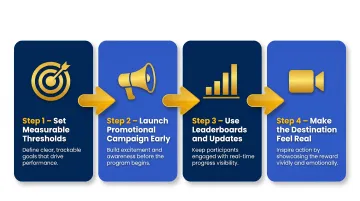
How the trip is communicated matters nearly as much as the trip itself. If people don't know what they're working toward, they won't work harder to get there.
Nail the Venue Foundation
The choice of property sets everything else. An aspirational destination paired with a mediocre hotel undermines the entire program. The venue must:
- Match or exceed the aspirational expectations you've built during the qualifying period
- Be appropriate for the group's profile and size
- Have the infrastructure to support the experiences you're planning
Venue sourcing is one of the most time-intensive parts of incentive trip planning — researching properties across international markets, comparing proposals, and negotiating contracts can consume dozens of hours that sales managers and corporate planners rarely have to spare.
That's where a venue sourcing partner pays off. Xalmax Travel handles the full sourcing process at no cost to clients — delivering competitive proposals, negotiating contracts, and managing logistics across their global hotel network, funded by venue commissions rather than client fees. President's Club programs can also access preferred rates and trip design consultations through Xalmax's rewards program.
The IRF recommends a 6–12 month planning lead time for large incentive group travel. Starting venue sourcing early gives you more options, better rates, and less stress.
Frequently Asked Questions
What is a corporate incentive trip?
A corporate incentive trip is a company-funded travel reward given to employees — typically top sales performers — who achieve specific business targets. It combines luxury travel with peer recognition, and is earned rather than assigned like standard business travel.
How do corporate incentive travel programs work?
Companies set measurable performance goals at the start of a qualifying period, track progress transparently, then reward qualifiers with all-expenses-paid trips. Programs typically include a recognition event — usually a gala dinner — alongside leisure activities and curated local experiences.
What are the main types of incentives used in corporate incentive programs?
Travel is consistently ranked the most motivating non-cash incentive — IRF research shows more than two-thirds of employees prefer it for large rewards. Other common categories include cash bonuses, merchandise, and recognition programs.
What are examples of incentive programs?
Typical structures include a President's Club for the top 5% of salespeople, a Circle of Excellence retreat for cross-department high performers, and partner reward programs for high-volume distributors. Lenovo's DCG President's Club, for example, sent its top 3% of sales performers to Maui.
Are corporate incentive trips taxable?
Yes. The IRS treats incentive travel as taxable compensation, reported on the employee's W-2. Most employers offset this with a "gross-up" payment so winners keep the full value of the award — consult a tax professional for reporting specifics.
What does a premium incentive trip actually look like?
Premium programs go well beyond a hotel stay. A high-end incentive trip might include a private gala dinner, curated cultural excursions, personalized gifting suites, and exclusive venue buyouts — all designed to feel distinct from any trip an attendee could book themselves. The goal is an experience that's genuinely unrepeatable.