Introduction
Burnout and disengagement aren't just HR talking points anymore — they're balance sheet problems. According to the APA's 2024 Work in America Survey, 25% of U.S. workers reported emotional exhaustion and 29% reported a lack of motivation or energy in the prior month. Meanwhile, Gallup's 2026 State of the Global Workplace report estimates that low engagement costs roughly $10 trillion annually — about 9% of global GDP.
The companies pulling ahead have made employee wellness a core business strategy. Corporate wellness incentive programs — structured reward systems that motivate employees to engage in health-improving behaviors — translate that commitment into measurable participation and outcomes.
This guide covers everything you need to build a program that actually works. You'll find the types of incentives available, ten program ideas with real business cases, a step-by-step build-and-launch framework, and how to measure results that matter to leadership.
Key Takeaways
- Corporate wellness incentive programs reward employees for participating in health-improving behaviors across physical, mental, financial, and social dimensions.
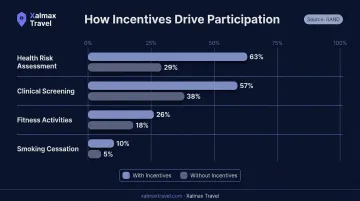
- Incentives dramatically increase participation — RAND data shows 63% HRA completion with incentives vs. 29% without.
- Effective programs mix financial, recognition-based, and experiential rewards tailored to workforce needs.
- Success depends on leadership buy-in, employee input, clear goals, and consistent communication.
- Track participation, absenteeism, and turnover — not just satisfaction scores — to prove ROI.
Why Wellness Incentives Matter: The Business Case
The Cost of Doing Nothing
Poor employee health isn't just a personal issue — it's a productivity drain with a measurable price tag. The CDC Foundation estimates that worker illness and injury costs U.S. employers $225.8 billion annually, or about $1,685 per employee. Physical inactivity alone produces more than 1,083 excess missed workdays and $285,000+ in costs for a 1,000-employee organization.
Mental health compounds the problem. According to HBR's summary of a Mind Share Partners survey:
- 34% of workers overall have left a role for mental health reasons
- That number rises to 50% of millennials and 75% of Gen Z
What Incentives Actually Do
Incentives don't just motivate — they bring in employees who wouldn't otherwise participate. Without them, wellness programs largely attract the already-healthy, leaving the people with the highest health costs untouched.
RAND's Workplace Wellness Programs Study found clear participation gaps between incentivized and non-incentivized programs:
| Activity | With Incentives | Without Incentives |
|---|---|---|
| Health Risk Assessment | 63% | 29% |
| Clinical Screening | 57% | 38% |
| Fitness Activities | 26% | 18% |
| Smoking Cessation | 10% | 5% |
The ROI Reality
ROI figures in wellness are frequently overstated, so it's worth being precise. RAND's analysis found that disease management programs return approximately $3.80 per $1 spent, while broad lifestyle management programs return closer to $0.50 per $1. Mental health investments show stronger returns: Deloitte UK found an average return of £5 for every £1 invested in workplace mental health programs.
The pattern across all three data points is consistent: programs targeting specific conditions or high-risk populations outperform broad, one-size-fits-all offerings. Pairing incentives with condition-specific interventions — rather than general fitness perks — is where the real returns are found.
Types of Corporate Wellness Incentives
Not all incentives work the same way. Understanding the categories helps you build a mix that drives both early adoption and long-term behavior change.
Financial Incentives
Financial incentives create immediate, tangible value and are the strongest drivers of early participation — especially for screenings and health assessments. Common examples include:
- Cash bonuses and gift cards
- HSA/FSA contributions
- Health insurance premium reductions
- Gym membership subsidies
45% of large firms offered wellness participation incentives in 2024, with more than half setting maximum HRA incentive values at $500 or more (KFF 2024).
One compliance note: most cash and gift card rewards are taxable income under IRS rules. This matters for program design — more on this in the FAQ section.
Recognition-Based Incentives
Public acknowledgment, peer-to-peer recognition, milestone awards, and team celebrations tap into intrinsic motivation and social belonging. These work best as complements to financial rewards, not substitutes. They sustain engagement after the initial novelty of financial rewards fades.
Experiential Incentives
Extra PTO, flexible scheduling, spa vouchers, and company-sponsored wellness retreats or team offsites are among the most memorable rewards you can offer. For employees who hit major wellness milestones, a company-sponsored retreat is especially powerful — it combines recognition, recovery, and community in a way that sticks long after the event.
Points-Based Systems
Employees earn points for completing wellness activities and redeem them for rewards of their choice. Activities typically include:
- Step challenges and fitness tracking
- Health assessments and biometric screenings
- Coaching sessions or mental health check-ins
The self-directed format keeps employees engaged because they're working toward goals they actually care about.
Purpose-Driven Incentives
Charitable donation options (where employees donate earned rewards to a cause), branded swag, and peer recognition moments reinforce community and shared values. Layered on top of financial incentives, these reinforce a sense of shared purpose that cash alone can't build.
10 Corporate Wellness Incentive Ideas That Work
1. Health Assessment Completion Rewards
Reward employees for completing a health risk assessment within the first 60 days of the program year. This "early bird" approach generates foundational health data, helps personalize each employee's wellness journey, and creates early momentum before engagement typically drops off.
2. Preventive Care and Biometric Screening Bonuses
Incentivize annual physicals, dental cleanings, vision exams, and biometric screenings (blood pressure, cholesterol, BMI). Catching health issues early reduces long-term healthcare costs, and signals that the company views employee health as an ongoing priority, not a one-time initiative.
3. Step and Fitness Challenges with Team-Based Prizes
Monthly or quarterly step challenges or fitness competitions with prizes for both participation and team achievement. A JAMA Internal Medicine randomized trial (STEP UP study) found that competition-based gamification increased daily steps by 920 compared to control groups — the largest gain of any social incentive format tested.
Team-based challenges add a social dimension that individual challenges miss: they build camaraderie and create accountability without adding pressure.
4. Mental Health Engagement Incentives
Reward employees for using EAPs, attending stress management workshops, or engaging with mindfulness or therapy apps. Incentivizing engagement actively normalizes mental health conversations at work.
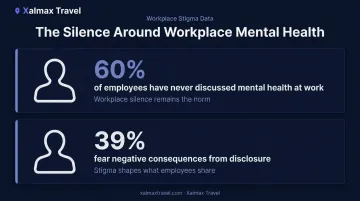
Nearly 60% of employees have never discussed their mental health status with anyone at work, and 39% worry that disclosure would have negative consequences (HBR 2019, APA 2024). Incentivizing engagement — without requiring disclosure — lowers that barrier meaningfully.
5. Financial Wellness Milestones
Reward employees for completing a budgeting workshop, starting an emergency savings account, or meeting with a financial advisor. PwC's 2026 Employee Financial Wellness Survey found 59% of employees are financially stressed, and 71% of Gen Z reported that financial stress directly reduced their productivity.
That link between financial stress and lost output makes financial wellness support one of the more direct levers HR teams have on day-to-day performance.
6. Smoking Cessation and Chronic Disease Management Rewards
Offer meaningful incentives for completing smoking cessation programs or actively engaging in chronic disease management. RAND found that incentivized smoking cessation programs doubled participation rates (10% vs. 5%). Employers may also save $150 to $540 annually for each employee who successfully quits.
Disease management programs return approximately $3.80 per dollar spent — the strongest ROI category in the RAND analysis — making targeted chronic disease incentives a high-value investment.
7. Wellness Retreat and Team Offsite Incentives
For employees who hit major wellness milestones, or as a team-wide reward, a company-sponsored wellness retreat is among the most impactful experiential incentives available. Shared experiences create lasting associations with the company that individual rewards rarely replicate.
The planning burden is often what stops companies from acting on this. Finding the right venue, negotiating group rates, and managing logistics can consume dozens of hours. Xalmax Travel removes that friction with a free corporate retreat venue sourcing service: describe your budget, group size, and goals, and their team returns complete proposals from a global network of premium hotels and resorts. Hotels and venues pay the commission, so there's no cost to your company.
8. Volunteer Time Off (VTO) Programs
Paid time off for volunteer work connects wellness to purpose. A UnitedHealth Group study found 93% of volunteers reported improved mood and 79% reported lower stress — and 71% of employees who volunteered through work felt better about their employer as a result.
VTO also strengthens employer brand in ways that most internal perks don't reach.
9. Ergonomic Workspace Improvement Stipends
Provide stipends for standing desks, ergonomic chairs, or professional workstation assessments. This reduces physical strain and injury risk — and it demonstrates genuine care for employees' day-to-day comfort rather than their abstract "wellness." For remote and hybrid employees, it's one of the most practical benefits you can offer.
10. Family Participation Bonuses
Extend wellness incentives to cover spouses or dependents. When entire households engage in healthy behaviors, employees benefit from stronger home-based support systems — which sustains program participation over time.
Compliance note: Employers should verify GINA and ACA compliance rules before designing family-inclusive wellness programs, particularly for health-contingent rewards.
How to Build and Launch a Corporate Wellness Incentive Program
Step 1: Survey and Assess
Before designing anything, understand what your employees actually want. Survey them on their wellness goals, schedule constraints, and interest in different activity types. Run a health risk assessment to establish a baseline.
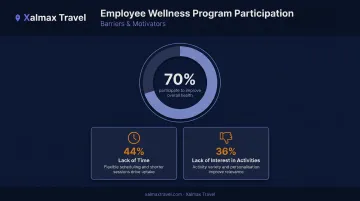
SHRM data shows 70% of employees participate in wellness programs to improve their overall health — but participation has two stubborn obstacles:
- 44% cite lack of time as a top barrier to engagement
- 36% cite lack of interest in the activities offered
Skip the assessment step, and you risk building a program that solves the wrong problems entirely.
Step 2: Build Your Support Structure
Leadership buy-in isn't optional. Without it, wellness programs get underfunded, deprioritized, and eventually dropped. Build a business case for management using the metrics that matter to them: absenteeism costs, healthcare spending trends, voluntary turnover rates.
From there, form a wellness committee of employee volunteers. A cross-departmental committee:
- Expands the program's reach beyond a single team
- Reduces the HR administrative burden
- Signals genuine organizational support — not just a policy memo
Step 3: Design, Communicate, and Launch
Set specific, measurable goals (participation rate targets, screening completion rates, absenteeism benchmarks). Choose an incentive mix — financial, recognition-based, and experiential — that fits your budget and your employees' preferences.
Clear, consistent communication is what separates programs that launch from programs that stick. Even well-designed incentives fail when employees don't know what to do, what they'll earn, or where to find resources. Cover your bases with:
- Launch communications (email, Slack, all-hands)
- Manager briefings so leaders can reinforce the message
- Regular reminders and progress updates throughout the year
How to Measure the Success of Your Wellness Incentive Program
Quantitative Metrics to Track
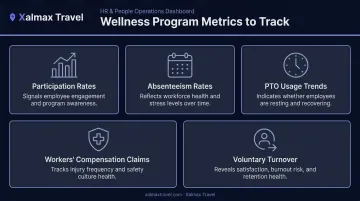
- Participation rates — the primary KPI; everything else flows from this
- Absenteeism rates — compare against baseline before program launch
- PTO usage trends — signals of burnout or disengagement
- Workers' compensation claims — relevant for physical wellness initiatives
- Voluntary turnover — the metric leadership cares most about
Tie these metrics to business outcomes directly. That's what earns wellness programs a seat at the budget table.
Qualitative Data Matters Too
Numbers tell part of the story. Employee stress surveys, satisfaction feedback, and focus groups reveal whether the program is actually supporting well-being or just generating compliance activity.
High participation rates paired with flat satisfaction scores usually indicate the incentive structure is working but the program content isn't resonating. That distinction matters when deciding where to invest next.
Improve Before You Expand
Before adding new program components, audit what you already have:
- Are current resources being fully utilized?
- Is low engagement a communication problem or an access problem?
- Would simplifying sign-up or improving promotion move the needle?
In most cases, fixing what exists delivers more value than launching something new.
Frequently Asked Questions
What is the difference between participatory and health-contingent wellness programs?
Participatory programs reward employees for joining — completing a health survey, for instance — regardless of health status. Health-contingent programs require meeting a specific standard or activity goal to earn the reward, and the ACA sets distinct compliance rules and incentive caps for each type.
Are employee wellness incentives taxable?
Most cash rewards, gift cards, and premium reductions are taxable income under IRS rules — cash is never excludable as de minimis. Consult a tax or legal advisor before finalizing incentive structures to avoid unexpected payroll tax liability.
How much should a company spend on corporate wellness incentives?
There's no universal benchmark, but KFF 2024 data shows that among large firms offering HRA incentives, 55% set maximum values at $500 or more. Program design and clear communication drive participation more than budget size — even modest incentives perform well when they reflect what employees actually value.
What wellness incentives get the highest participation?
Financial incentives — gift cards, HSA contributions, premium reductions — consistently drive the highest initial participation, especially for screenings and assessments. Pairing them with social elements like team challenges and experiential rewards sustains engagement over time.
How do you measure the ROI of a corporate wellness incentive program?
Track healthcare cost changes, absenteeism rates, productivity metrics, and voluntary turnover — and compare them against program investment over time. Baseline data collected before launch is essential; without it, you can't credibly attribute improvements to the program.
Can small businesses run effective corporate wellness incentive programs?
Yes. Small businesses can start with flexible PTO, peer recognition programs, and fitness challenges — all of which cost little to nothing. Scale financial incentives as budget allows. Start simple, measure what works, and build from there.